
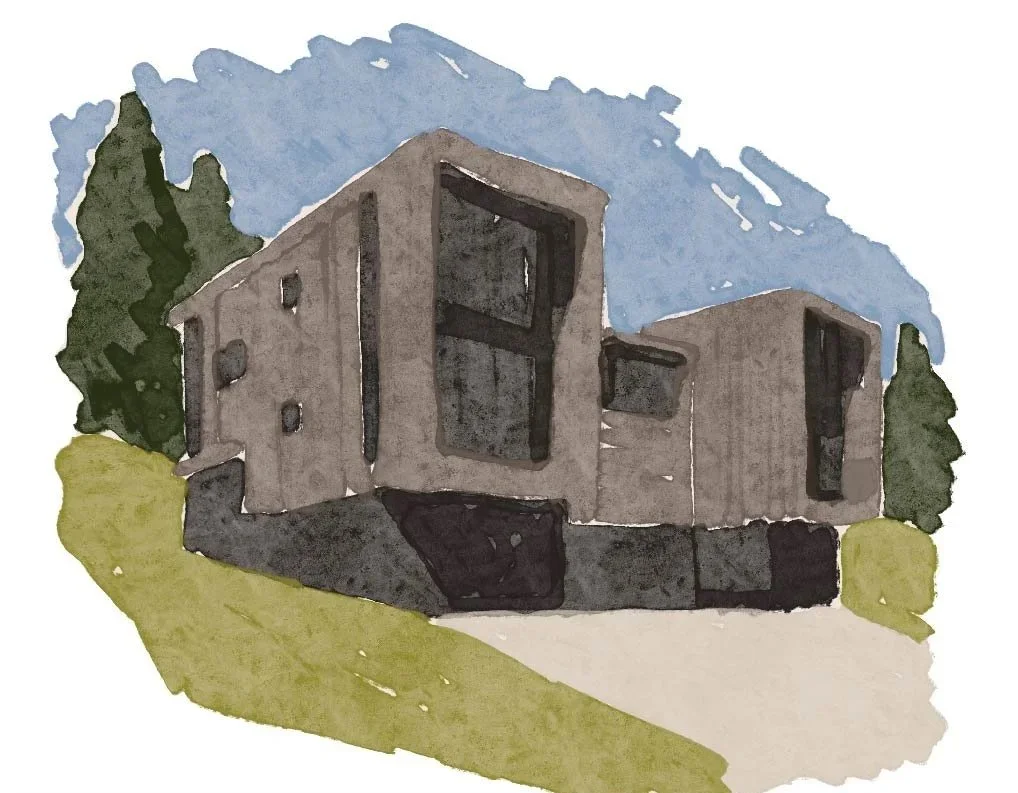
NELSON DRIVE
36 Affordable Rentals
Leveraging no-cost land with the development expertise of the CHT.
About
On a 3.15-acre US Forest Service administrative parcel in east Jackson, the CHT and the Bridger Teton National Forest Service have an opportunity to develop affordable rental housing for essential employees in Teton County. Nelson Drive represents a new model for a public-private partnership, made possible when the Department of Agriculture issued the first 30-year Special Use Permit in the nation to the Housing Trust.
The Need
The Bridger Teton relies on trained, professional employees to manage 3.4 million acres of forest land surrounding Teton County, Wyoming. Their essential services include but are not limited to ensuring access to recreational opportunities (on the river and on trails), equipping rangers to provide for the safety of hikers, bikers and boaters, and wildland firefighting required anytime a natural or human caused fire breaks out on the forest.
In the last ten years, the housing need facing the Forest has increased exponentially. The federal wage scale has not kept pace with our local housing market (ownership or rental): 94% of permanent full-time employees are unable to afford to buy a market home. Without access to affordable housing for the Forest’s essential employees it will be virtually impossible to recruit and retain qualified employees.
A 2025 BTNF employee housing study found that 110 units are necessary to ensure a viable workforce into the future. Expansion of the Forest Service housing at the Nelson Drive Administrative site is the most cost effective and efficient opportunity for the Forest to address a portion of this need. In the absence of additional housing opportunities in Jackson, the BTNF will need to shift operations to outlying communities where housing is more affordable.
The Partnership
Approving the Master Site Plan in 2009 was the first essential step in the process. From there, the Bridger Teton knew they would have to get creative to develop the housing—not only would capital be required to subsidize the vertical construction, but the staff expertise required to develop and manage affordable housing did not exist.
This challenge kicked off a decade long discovery period where the Community Housing Trust worked with the Forest Service to investigate any number of different authorities that would make public/private partnership possible.
As a result of these efforts, the CHT and BTNF have created a new model for public/private partnership that upon completion, can serve as a model for Forests across the country struggling to attract and retain their essential employees.
This innovative public/private partnership is made possible by a 30-year Special Use Permit authorizing development of affordable housing on National Forest lands—the first such permit in the nation. Nelson Drive represents an opportunity to implement a new solution by leveraging public land contributed at no cost, with the development expertise of a not-for-profit affordable housing developer.
The Plan
36 affordable rental units in 14 buildings. One and two-bedroom units in a mix of duplexes and triplexes.
The CHT and BTNF are working with Agrostis land planners and Nelson Engineering to gather geotechnical information that will allow us to finalize the site plan in a way that takes into consideration the topography of the property and the surrounding environment. At the same time, CHT and BTNF are working with our team of architects to refine drawings to prepare for construction.
In consideration for the Special Use Permit, one-third of the homes will be dedicated to Forest Service employees. The remaining units will be available for qualified Housing Trust applicants.
FAQs
-
The Community Housing Trust and BTNF are working with a design team to refine the site plan. Once it is ready, we will create opportunities for neighbors to learn more about the development plans for the Nelson Drive Administrative site.
-
We hope to begin construction in the Spring of 2026.
-
The proposed development is confined to the seasonal winter area where human and motorized activity is limited to the developed trail network. The slopes adjacent to the construction site are in the winter wildlife closure area; this area is closed to human and motorized activity. There is no development planned for the winter wildlife closure area. We are adding fences to keep people and dogs from creating trails upslope. In addition, CHT policies limit the number of dogs per unit and pets will be managed across the development.
-
Our team is acutely aware that this is a beloved trailhead, and we are dedicated to improving upon its existing condition. Together with Teton County Pathways and Friends of Pathways, we are working to reconfigure the trailhead and realign the trail. We are planning to provide a similar number of parking spaces and address existing, chronic drainage problems. Access to the trails will be maintained during construction.
-
The project is made possible by a 30-year Special Use Authorization issued to CHT from the BTNF to develop affordable housing on Nelson Drive.
CHT manages design in consultation with the BTNF and CHT oversees construction of the affordable rentals.
CHT secures a construction to permanent loan as well as philanthropy to build the project and will own the improvements and service the debt.
CHT will be responsible for ongoing management of operations, maintenance, and leasing.
CHT will sell Master Leases to local employers in need of housing for their employees.
The BTNF will maintain ownership of the land o The BTNF employees will have the first right to rent up to one-third of the units.
-
Adequate parking for residents and guests will be provided on-site through surface parking and/or garages.
-
This is the only way for the Forest to proactively address their housing problem. They do not have access to capital to purchase Master Leases at NSP or the Virginian; the resource they have is land adjacent to town and existing employee housing and the ability to partner with the CHT who is willing to fund the vertical subsidy so that this project can benefit essential Forest Service employees and our community at large.